
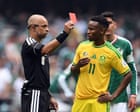
The World Cup of Calvinball: How Untested Rule Changes Are Turning Refereeing into a Free-for-All
FIFA's hasty implementation of new laws has left referees scrambling to keep up, resulting in a chaotic and inconsistent application of the rules. As the 2026 World Cup approaches, concerns are growing that the changes may undermine the integrity of the game and create a sense of confusion among fans and players alike.
The Rules of Calvinball
In the classic comic strip Calvin and Hobbes, Calvinball was a game invented by the mischievous Calvin, where the rules were constantly changing and often arbitrary. Players would argue over what was and wasn't allowed, and the game would descend into chaos. Sound familiar?
Fast-forward to the modern game, where FIFA has introduced a slew of new laws aimed at increasing player safety and improving the flow of play. However, many of these changes have been rushed into place without sufficient testing or consultation with the game's stakeholders.
The Consequences of Hasty Change
Take, for example, the new rule governing handball. Under the old rules, a handball was awarded if a player deliberately handled the ball with their hand or arm. But the new rule now includes a provision for "mistaken identity" – where a player is mistakenly awarded a handball when they didn't actually touch the ball.
On the surface, this change seems reasonable. But in practice, it has created a new layer of complexity and confusion. Referees are now having to make split-second decisions about whether a player has genuinely handled the ball or merely had their arm in the wrong place at the wrong time.
The results have been dramatic. In a recent match, a player was awarded a handball for a blatant foul, only to have the decision overturned on appeal. The controversy sparked a heated debate among fans and pundits, with some arguing that the new rule had created a "gray area" that was impossible to police.
The Impact on Refereeing
Referees are under more pressure than ever to make quick and accurate decisions, but the untested rule changes are making it increasingly difficult for them to do their job.
"It's like trying to navigate a minefield," said Mark, a veteran referee who's been officiating matches for over a decade. "One wrong move and the whole match can be thrown into chaos."
Mark's concerns are echoed by many of his colleagues, who feel that the new rules are being introduced too quickly and without sufficient training. "We're expected to know the rules inside out, but it's like trying to learn a new language overnight," he said.
The Fallout
The controversy surrounding the new rules is having a knock-on effect on the game as a whole. Fans are becoming increasingly frustrated with the inconsistencies and confusion, while players are struggling to adapt to the changing landscape.
"It's like playing a different game every week," said John, a midfielder who's been playing in the top tier for over five years. "You never know what the referee is going to call, so you have to be constantly on your toes."
As the 2026 World Cup approaches, it's clear that the game is at a crossroads. Will FIFA be able to get the rules sorted out, or will the chaos continue to reign supreme? Only time will tell.

A Call to Action
So what's the solution? For starters, FIFA needs to slow down the pace of change and give referees the training and support they need to implement the new rules effectively. Fans and players also need to be more understanding and patient, recognizing that the game is going through a period of transition.
Ultimately, the World Cup is about one thing: the beautiful game. Let's not let the rules get in the way of the magic.
Source: Guardian | Original Article